India Ethanol Glut Could Change Fuel Blending And Demand
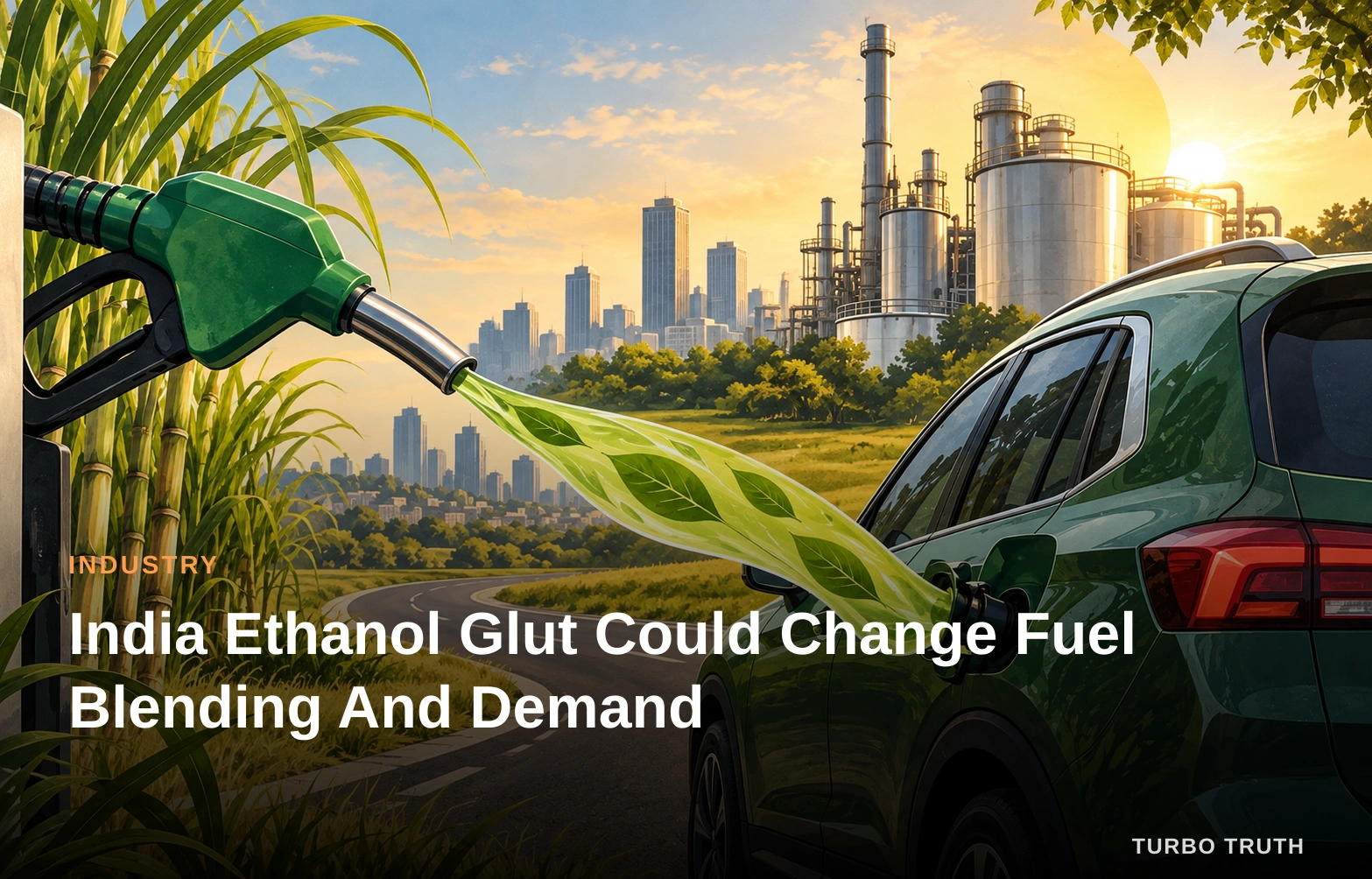
India’s ethanol production capacity has reached about 20 billion litres, but current domestic demand is much lower. With E20 blending needing around 11 billion litres and non-fuel sectors using another 3, 3.5 billion litres, nearly 7 billion litres is left looking for a market. That matters because ethanol supply and blending policy can eventually affect fuel availability and the way petrol is sold to Indian vehicle owners.
20 Billion Litres Capacity Vs E20 Demand
The gap is mainly between installed capacity and the amount of ethanol currently being absorbed. E20 blending alone accounts for roughly 11 billion litres, while industrial and other non-fuel uses take another 3, 3.5 billion litres.
That leaves a substantial surplus even after these existing uses are counted. The issue is therefore no longer only about producing enough ethanol, but also about finding additional demand for what India can already produce.
Where The Extra Ethanol Could Go
The numbers show how large the unused portion is:
- Around 20 billion litres of installed ethanol capacity
- About 11 billion litres needed for E20 blending
- Another 3, 3.5 billion litres used outside fuel
- Nearly 7 billion litres still needs a market
For vehicle owners, this is relevant because petrol blending remains one of the biggest domestic outlets for ethanol. Any expansion in demand could change how quickly the available supply gets absorbed.
E20 Is Already A Major Demand Source
At around 11 billion litres, E20 blending represents the largest specific demand figure mentioned here. That makes the petrol market central to the ethanol balance, while the remaining requirement has to come from other uses or additional fuel demand.
The key point for buyers is that this is an industry supply-demand issue rather than a change to a particular car or bike model. It could become more relevant if future fuel requirements or new applications create more room for ethanol.
What Should Petrol Owners Watch?
The important number is the gap between roughly 20 billion litres of capacity and current consumption. If more buyers for ethanol emerge, the surplus can gradually be absorbed. If demand does not grow at the same pace, producers will continue looking beyond the existing E20 and non-fuel markets.
For owners, the practical question is how future fuel policy and petrol availability develop as this excess capacity is dealt with. How do you expect India’s ethanol surplus to affect your fuel choices?
More to read
All news →

0 Comments
Join the discussion
Reading is free for everyone — register (also free) to reply in threads.
No comments yet — start the discussion.