Hyundai Bayon Euro Spec Debuts – Hybrid, Turbo Engines Details
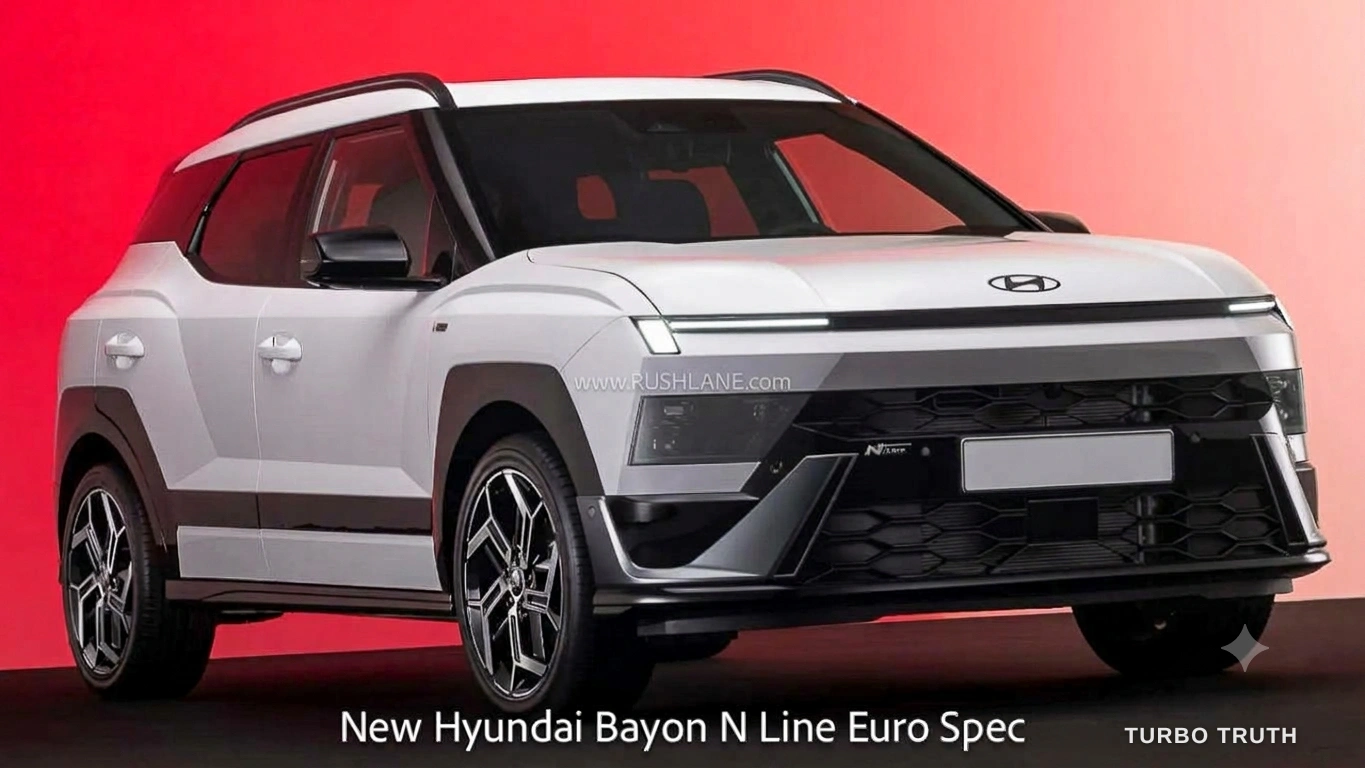
Illustration generated by Turbo Truth.
Hyundai has unveiled the Euro-spec version of the Bayon, marking its latest entry in the subcompact SUV segment. The model arrives with three engine choices: a 1.6‑litre hybrid delivering 136 PS, a 1.5‑litre naturally aspirated unit producing 115 PS, and a 1.0‑litre turbocharged engine rated at 90 PS. Based on Hyundai's 'Art of Steel' design philosophy, the new-gen Bayon shows angular lines and a boxier profile. The Euro-spec variant is aimed at regions where tighter emissions rules encourage hybrid and turbocharged powerplants.
Design and Styling Updates
The exterior gains sharper creases along the bonnet and a more upright stance, giving the Bayon a rugged look that aligns with Hyundai’s global design language. New LED headlamps and a revised grille add to the front‑end visual weight. These changes are intended to make the vehicle appear more commanding on the road.
Inside, the cabin sees an updated dashboard layout with a larger touchscreen and revised trim options, though specific material details for the Euro spec have not been disclosed yet. The boxier profile is expected to improve headroom and visibility for occupants.
Powertrain Options Announced
Hyundai has detailed the three powerplants that will be offered in the Euro-spec Bayon, each targeting a different balance of efficiency and performance. The hybrid system pairs a petrol engine with an electric motor to aid fuel savings in urban driving. The naturally aspirated petrol unit is positioned as a cost‑effective choice for buyers who prefer conventional engine technology. The turbocharged petrol engine delivers a peppier response for those seeking extra verve without moving to a larger displacement.
- 1.6‑litre hybrid engine – 136 PS output
- 1.5‑litre naturally aspirated petrol – 115 PS output
- 1.0‑litre turbocharged petrol – 90 PS output
What Indian Buyers Should Know
Although the Euro-spec Bayon is not yet slated for release in India, its debut signals Hyundai’s continued focus on hybrid and turbocharged powertrains for its global lineup. Indian buyers who are considering a subcompact SUV may want to watch for any future localisation of these engines.
For now, the current Bayon sold in India retains its existing 1.2‑litre petrol and 1.0‑litre turbo options, so the Euro-spec figures serve as a reference point rather than an immediate purchase consideration. Keeping an eye on Hyundai’s official announcements will help buyers decide whether to wait for a possible hybrid variant or proceed with the present offerings.
Should Indian buyers wait for a possible hybrid Bayon launch in the local market?
More to read
All news →
0 Comments
Join the discussion
Reading is free for everyone — register (also free) to reply in threads.
No comments yet — start the discussion.