India CAFE 3 norms 2027 to 2032 what carmakers must do now
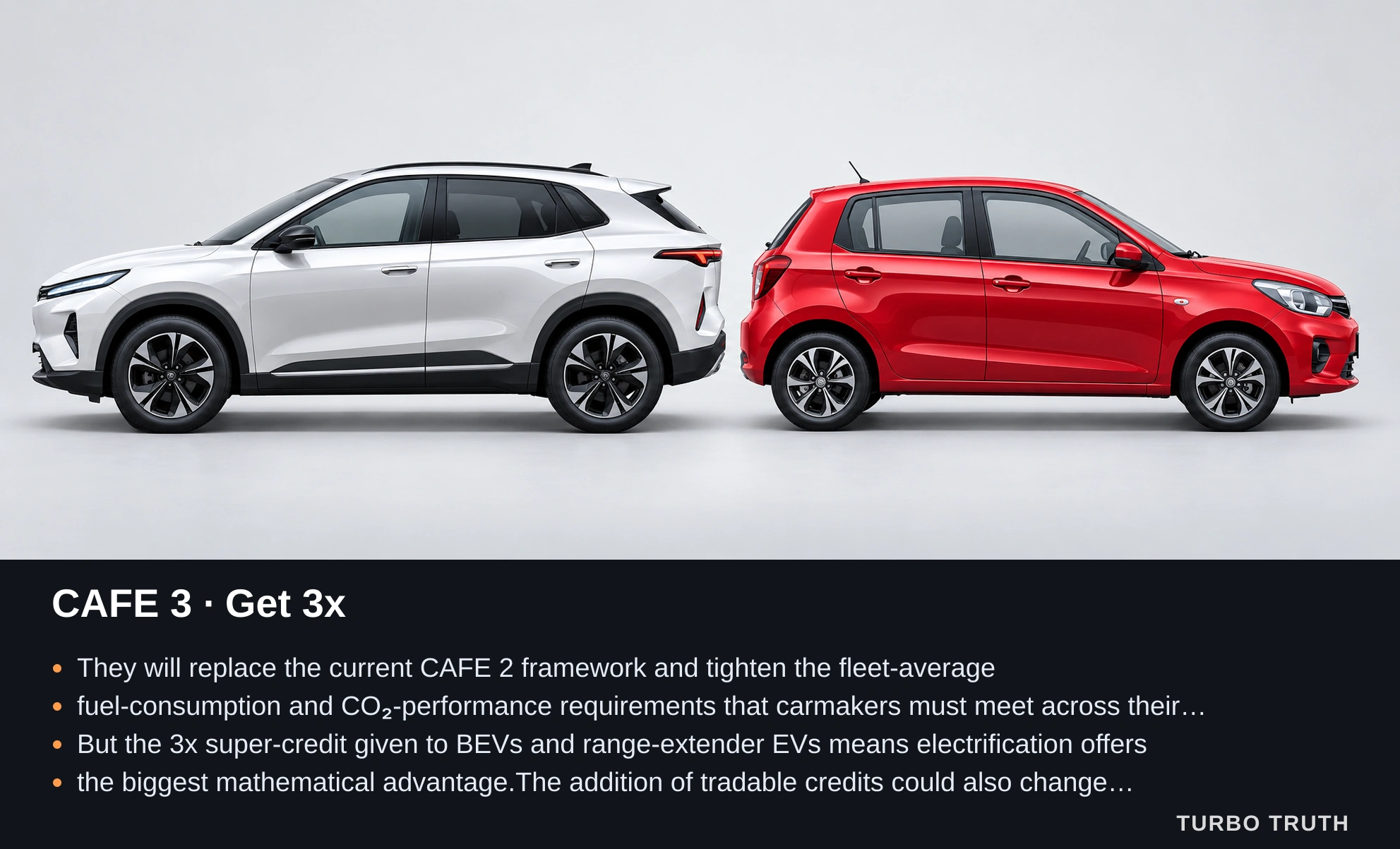
Illustration generated by Turbo Truth.
India has officially notified the Corporate Average Fuel Efficiency Phase 3 norms that will govern passenger vehicles sold between 2027 and 2032. The rules tighten fleet-average efficiency targets, reward electric vehicles with triple credit weightage, and allow manufacturers to trade credits among themselves. There is no special concession for small or entry-level cars this time.
What the new targets actually mean
Under CAFE 3, every manufacturer's sales-weighted average fuel consumption must meet a stricter threshold than what Phase 2 demanded. The government has not carved out an exemption for compact or budget vehicles, which means makers who sell mostly small petrol cars cannot rely on that segment to pull their average down easily. The pressure to either clean up their internal-combustion lineup or push more electrics into the mix is now squarely on every brand, regardless of size.
The EV super credit explained
The headline provision is a three-times super credit for battery electric vehicles and range-extender electric vehicles. In plain terms, selling one EV counts as selling three vehicles for the purpose of calculating a manufacturer's fleet average. That gives brands with a strong EV portfolio a significant cushion, and it explains why companies that have been building out their electric range over the last two years are better positioned than those still dependent on petrol and diesel volumes.
Key points from the notified rules
- Fleet-average efficiency targets become stricter from the 2027 model year onward
- Battery EVs and range-extender EVs each earn a 3x super credit toward compliance
- Manufacturers can buy and sell credits between companies, so a brand with surplus credits can trade them to one that is falling short
- No separate relief category exists for small or entry-level passenger cars
- The framework runs through the 2032 model year
What this means if you are buying now
If you are in the market today, the norms do not change what is on the showroom floor this month. What they do signal is that carmakers will push harder on fuel efficiency and electrification between now and 2027, which could mean more hybrid options, more EVs, and possibly some restructuring of variant lineups as manufacturers try to hit their targets without raising costs too sharply. If you are considering a long-range purchase plan, watching which brands have a credible EV or strong-hybrid roadmap is now more relevant than it was a year ago.
Will small-car buyers end up subsidising EV credits through higher prices?
More to read
All news →
0 Comments
Join the discussion
Reading is free for everyone — register (also free) to reply in threads.
No comments yet — start the discussion.