Ola Electric shares drop amid ₹1000 crore rights issue plan
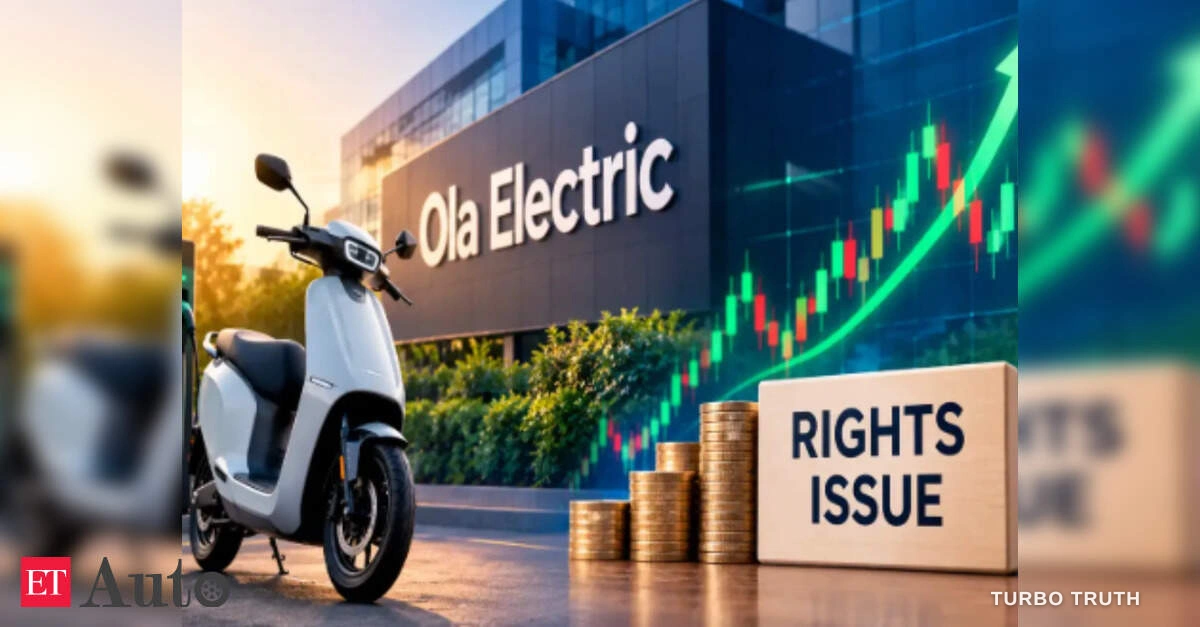
Illustration generated by Turbo Truth.
Ola Electric has seen a notable drop in its share price this week as the electric two-wheeler manufacturer prepares to raise fresh capital from the market. The company board has formally approved the terms for a ₹1,000 crore rights issue following recent in-principle approvals received from both the Bombay Stock Exchange and the National Stock Exchange. The announcement of this equity dilution has led to a four percent decline in the value of the firm's traded shares.
Why is Ola Electric raising funds?
Raising ₹1,000 crore through a rights issue allows the manufacturer to bring in substantial additional funds directly from its existing shareholder base. When a publicly listed automobile company opts for this specific funding route, it typically signals a requirement to fund ongoing capital expenditure or to strengthen its financial balance sheet against market headwinds. For an aggressive electric vehicle maker continually expanding its production footprint and battery manufacturing capabilities, massive capital infusion remains a recurring necessity to keep the assembly lines moving.
What this means for retail investors
The immediate stock market reaction has been a downward dip in the share price, which is a standard response when new shares are expected to be introduced at a discount to the prevailing market value. Existing investors now face a financial decision regarding their ongoing holdings in the electric vehicle manufacturer.
Current shareholders can choose to subscribe to the upcoming rights issue to maintain their proportional ownership stake in the company. Those who decide not to participate in the offering will inevitably see their overall equity stake diluted once the newly issued shares enter the open market.
Impact on the electric scooter market
For everyday buyers looking at purchasing an Ola scooter this month, corporate financial maneuvers rarely change the immediate buying experience on the showroom floor. However, a well-capitalised manufacturer is generally much better positioned to sustain its vast service network and consistently push out crucial software updates for its existing product lineup. Fresh capital in the electric vehicle space is typically utilised to support several critical operational areas:
- Stabilising existing warranty and repair infrastructure across the country
- Expanding physical sales and dealership networks into smaller cities
- Funding extensive research required for upcoming vehicle platforms
- Managing the heavy working capital required to sustain high production volumes
Does this stock movement change your view on buying from the brand?
More to read
All news →



0 Comments
Join the discussion
Reading is free for everyone — register (also free) to reply in threads.
No comments yet — start the discussion.